
Why Sciatica Sometimes Returns After Feeling Better
Few experiences are more discouraging than the return of pain you thought was gone. Sciatica has a particular reputation for this: the radiating leg pain, tingling, or numbness fades, sometimes for months or years, and then reappears without obvious warning. The explanation begins with what sciatica actually is. Rather than a diagnosis in itself, sciatica is a set of symptoms produced when the sciatic nerve becomes irritated or compressed, and several different spinal conditions can cause that compression. When symptoms improve but the underlying condition persists or redevelops, recurrence becomes possible.
Patients in Westwood, Bloomfield, Bridgewater, and East Brunswick, NJ, regularly ask the team at Comprehensive Spine Care why their sciatica came back after seemingly successful treatment, and the answer says a great deal about how long-term spine health really works.
What Sciatica Actually Is
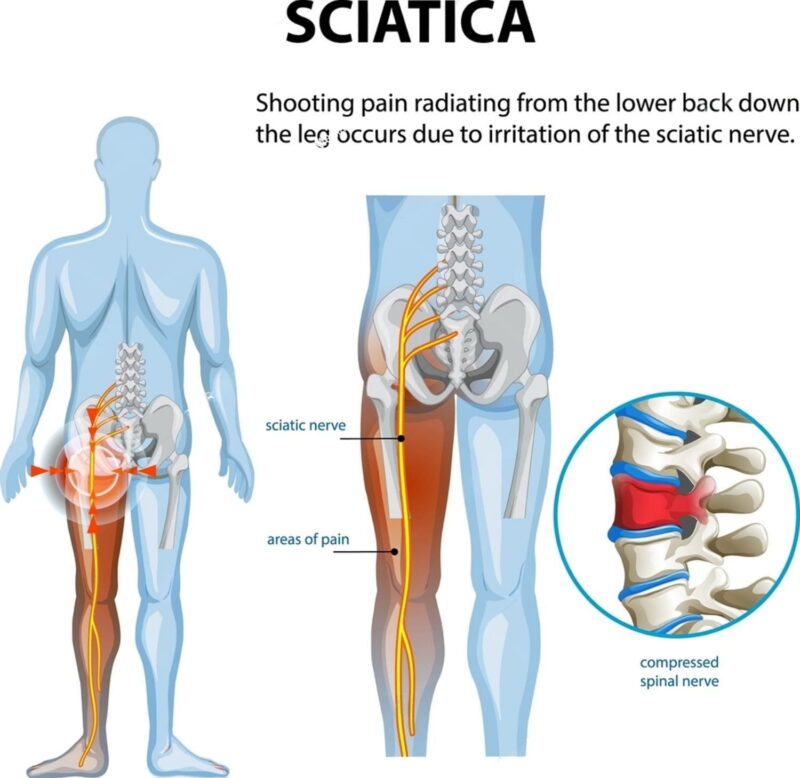
The sciatic nerve is the largest in the body. It originates from nerve roots in the lower spine and travels through the hips, buttocks, and legs before branching into smaller nerves below the knee.
When one or more of the nerve roots contributing to the sciatic nerve become irritated, symptoms may develop anywhere along the nerve’s pathway. These symptoms commonly include radiating leg pain, tingling, numbness, burning sensations, or weakness.
Because the nerve extends such a long distance, symptoms are often felt far from the actual source of the problem in the lower back. This is one reason why understanding the underlying cause of sciatica is so important when determining treatment and preventing future flare-ups.
The Underlying Cause May Still Be Present
One of the most common reasons sciatica returns is that the structural condition causing nerve irritation never fully resolves. Symptoms may improve temporarily as inflammation decreases, but the underlying source of compression can remain.
A herniated disc is one of the leading causes of sciatica. In some cases, disc material continues to place pressure on the nerve root even after symptoms improve. If inflammation increases again or the disc changes further, symptoms may return.
This does not necessarily mean previous treatment failed. Rather, it reflects the fact that many spinal conditions evolve over time and may continue affecting nearby nerves even after a period of improvement.
New Disc Changes Can Develop
Even when an initial disc problem improves, additional disc degeneration may occur later. Spinal discs naturally lose water content and elasticity with age, making them more susceptible to injury or structural changes.
Over time, another portion of the same disc may protrude, or a different disc may begin compressing nearby nerves. Because the lumbar spine experiences substantial stress during everyday activities, recurrent disc-related issues are not uncommon.
This is one reason why symptom recurrence should not automatically be assumed to be identical to the original episode. New imaging and evaluation may be necessary to determine whether the cause has changed.
Spinal Stenosis May Progress Over Time
Not all cases of sciatica are caused by disc problems. Some individuals experience symptoms due to spinal stenosis, a condition involving narrowing around the spinal canal or nerve pathways.
Spinal stenosis often develops gradually as part of the aging process. Bone spurs, ligament thickening, and degenerative changes can slowly reduce available space around the nerves.
Because stenosis tends to progress over time, symptoms may improve for periods and then return as narrowing increases. Walking tolerance may decrease, leg discomfort may reappear, and activities that were once comfortable may become more difficult.
Muscle Weakness Can Increase Stress on the Spine
Following recovery from sciatica, many individuals return to normal activities and stop focusing on the exercises or rehabilitation strategies that helped them improve. Over time, the muscles supporting the spine may become weaker.
Core muscles, hip muscles, and lower back stabilizers play an important role in maintaining spinal alignment and reducing stress on discs and joints. When these muscles weaken, the spine may become less efficient at handling everyday loads.
As a result, structures that were previously irritated may once again become stressed, increasing the likelihood of nerve compression and recurring symptoms.
Poor Posture and Movement Habits
Daily habits can also contribute to recurring sciatica. Prolonged sitting, repetitive bending, improper lifting techniques, and poor posture place ongoing stress on the lumbar spine.
Many individuals spend hours sitting at desks, driving, or using electronic devices. These positions can increase pressure within the lumbar discs and contribute to ongoing spinal strain.
When poor movement mechanics are repeated over months or years, they may gradually increase the likelihood of recurring nerve irritation. Addressing posture and body mechanics is often an important component of long-term prevention.
Instability in the Lower Spine
Some cases of recurring sciatica are associated with spinal instability. Conditions such as spondylolisthesis occur when one vertebra shifts relative to another.
Even small amounts of instability can alter how forces are distributed through the spine and change the amount of pressure placed on nearby nerve roots. As movement patterns change, symptoms may fluctuate depending on activity levels and posture.
Instability-related symptoms sometimes come and go, making it difficult for individuals to predict when flare-ups will occur.
Scar Tissue and Previous Treatment
In certain situations, sciatica may return following previous procedures intended to relieve nerve compression. While many individuals experience significant improvement after treatment, healing tissues can sometimes create new challenges.
For example, scar tissue may form around nerve structures during recovery. This does not always cause symptoms, but in some cases it may contribute to recurring irritation.
Procedures such as microdiscectomy are often highly effective for relieving nerve pressure, but continued monitoring remains important because spinal structures continue to age and change over time.
How Specialists Evaluate Recurring Sciatica
When symptoms return, specialists typically begin by determining whether the recurrence is related to the original condition or a new source of nerve compression.
A detailed history and physical examination help identify symptom patterns and neurological changes. Imaging studies such as MRI scans may be used to evaluate discs, nerves, and surrounding structures.
Educational resources on physiatry and pain management explain how treatment strategies are often tailored to the specific cause of recurrence. Understanding why symptoms returned helps guide decisions regarding rehabilitation, activity modification, or additional interventions.
Habits That May Help Reduce Future Flare-Ups
Although recurrence cannot always be prevented, several strategies may help support long-term spinal health:
• Maintain a consistent core-strengthening routine
• Use proper lifting mechanics during daily activities
• Avoid prolonged sitting without movement breaks
• Maintain a healthy body weight to reduce spinal stress
• Stay physically active with low-impact exercise
These habits help support spinal stability and may reduce the likelihood of recurring nerve irritation.
Understanding Why Sciatica Sometimes Returns
Recurring sciatica is not a sign that earlier treatment failed; it is a reminder that symptom relief and structural resolution are not always the same thing. Because multiple conditions can irritate the sciatic nerve, lasting freedom from symptoms usually depends on addressing the root cause and maintaining the habits that protect it: core conditioning, healthy body mechanics, regular activity, and attention to posture. Just as important is proper evaluation when symptoms return, since a new episode may stem from a different source than the original one.
Rather than assuming history is simply repeating itself, patients benefit from a fresh assessment. That is the approach taken at Comprehensive Spine Care, where specialists serving Westwood, Bloomfield, Bridgewater, and East Brunswick, NJ, treat each recurrence as its own question deserving its own answer.
Sources
Deyo RA, Mirza SK (2016). Clinical practice of lumbar radiculopathy. New England Journal of Medicine.
Weinstein JN, et al. (2006). Surgical versus nonsurgical treatment for lumbar disc herniation. JAMA.
Atlas SJ, Deyo RA (2001). Evaluating and managing acute low back pain in the primary care setting. Journal of General Internal Medicine.