
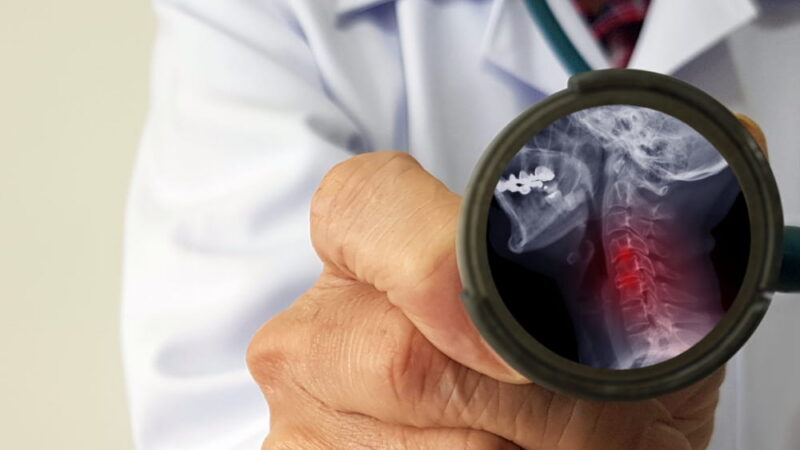
Why Posterior Cervical Surgery Can Mean Different Things
Neck surgery is not a single procedure, and the terminology can be confusing when several approaches sound similar. Someone researching posterior cervical surgery may see terms like laminectomy, decompression, fusion, instrumentation, or stabilization and wonder whether they all describe the same operation. They do not. Each term refers to a specific goal within spine surgery, and understanding those goals can make treatment conversations much easier to follow.
At Comprehensive Spine Care in New Jersey, patients from Westwood, Bloomfield, Bridgewater, and East Brunswick may encounter these terms while learning about conditions that affect the spinal cord or nerve roots in the neck. Posterior cervical laminectomy and posterior cervical fusion are closely related, but they are not interchangeable. A laminectomy creates more room for compressed nerves or the spinal cord. A fusion stabilizes the spine when movement, alignment, or structural weakness could create ongoing problems.
That distinction matters because some patients need decompression alone, while others need decompression combined with stabilization. The decision depends on spinal alignment, the number of levels involved, the degree of arthritis or instability, and whether the spinal cord is under pressure. Spine specialists such as Rafael Levin, MD, MSc; Nomaan Ashraf, MD, MBA; Evan Baird, MD, FAAOS; and Jonathan Lester, MD evaluate these details to determine which surgical concept best fits the underlying anatomy.
What the Posterior Cervical Approach Means
The word “posterior” simply means the surgery is performed from the back of the neck. In cervical spine surgery, surgeons may approach the spine from the front, the back, or occasionally both, depending on where compression is located and what needs to be corrected.
A posterior approach can be useful when compression affects multiple levels or when the spinal cord needs more space from behind. The back of the cervical spine contains structures called laminae, which form part of the protective arch around the spinal canal. During a laminectomy, some of this bone is removed to relieve pressure on the spinal cord or nerve structures.
Educational information on posterior cervical laminectomy and fusion explains how this approach may combine decompression with stabilization when the cervical spine requires added support. The key point is that the posterior route provides access to the back side of the spinal canal, where surgeons can address compression and, when necessary, place hardware to support alignment.
What a Cervical Laminectomy Does
A cervical laminectomy is a decompression procedure. Its main purpose is to create more space for the spinal cord or nerve roots by removing the lamina, the bony covering at the back of the spinal canal. When spinal structures narrow the canal, the spinal cord may become compressed, leading to symptoms such as neck pain, arm numbness, hand clumsiness, balance problems, or weakness.
This type of narrowing is often associated with spinal stenosis, a condition in which the spaces around the spinal cord or nerves become too tight. In the cervical spine, stenosis can be especially concerning because the spinal cord passes through the neck on its way to the rest of the body. Pressure in this area may affect the arms, hands, legs, balance, or coordination.
A laminectomy relieves pressure by removing the restrictive bone and allowing the spinal cord more room. In some cases, decompression alone may be enough. In others, removing bone from the back of the spine may reduce structural support, especially if multiple levels are treated or if the spine already shows signs of instability. That is when fusion becomes part of the discussion.
What Cervical Fusion Adds to the Procedure
Fusion is not primarily about removing pressure. Its purpose is stability. During a fusion, the surgeon encourages two or more vertebrae to heal together into one solid segment. This reduces abnormal motion and helps maintain alignment after decompression.
In a posterior cervical fusion, screws and rods may be placed along the back of the cervical spine to hold the vertebrae in a stable position while bone graft material helps the fusion develop. Over time, the treated vertebrae grow together, limiting movement at those levels. This can be helpful when the spine is unstable, misaligned, or at risk of becoming unstable after decompression.
Fusion may be added when the neck has excessive motion, significant arthritis, deformity, or a forward-curving alignment problem. It may also be used when several laminae are removed, and the surgeon determines that the spine needs extra support to maintain its structure. While fusion limits motion at the treated levels, it can provide a durable solution when stability is the priority.
Laminectomy Alone vs. Laminectomy With Fusion
The difference between laminectomy and fusion is best understood by separating their goals. A laminectomy relieves pressure. Fusion stabilizes movement. A patient may need one or both depending on the condition of the cervical spine.
Laminectomy alone may be considered when the spine is well aligned and structurally stable. In these cases, removing bone to decompress the spinal cord may achieve the main surgical goal without requiring the vertebrae to be fused. Preserving motion can be beneficial when the spine can safely remain mobile.
Laminectomy with fusion may be considered when decompression alone could leave the spine unstable or when instability already exists. If the spine has abnormal motion, severe degeneration, or a tendency to shift after bone removal, fusion may help prevent future problems. The decision is not based on preference alone; it is based on anatomy, imaging, and the mechanical demands placed on the cervical spine.
Why Surgeons Choose One Approach Over Another
Surgeons evaluate several factors before recommending a posterior cervical laminectomy alone or laminectomy with fusion. One of the most important is alignment. If the neck maintains a healthy curve and the spinal cord can drift away from compression after decompression, laminectomy alone may be reasonable in selected cases. If the spine is kyphotic, unstable, or poorly aligned, fusion may be needed to support the correction.
The number of levels involved also matters. Multilevel decompression may create a greater need for stabilization than a single-level procedure. Bone quality, age, prior surgeries, and the presence of arthritis can also influence the recommendation.
Another factor is whether symptoms come from spinal cord compression, nerve root compression, or both. When arm symptoms are caused by a specific compressed nerve root, a targeted procedure such as cervical foraminotomy and discectomy may sometimes be discussed. When the spinal cord is compressed across multiple levels, posterior decompression may become more relevant.
Conditions That May Lead to Posterior Cervical Surgery
Posterior cervical surgery is often discussed when the spinal canal has narrowed enough to affect the spinal cord. This may occur from arthritis, thickened ligaments, bone spurs, disc degeneration, or a combination of changes that develop over time. Symptoms may include neck discomfort, arm pain, numbness, balance changes, hand weakness, or difficulty with coordination.
A herniated disc may also contribute to nerve compression in the cervical spine. However, not every disc problem requires posterior surgery. The location of the disc, the number of levels involved, and the presence of spinal cord compression all influence which approach is most appropriate.
Some patients compare posterior surgery with anterior procedures, such as anterior cervical discectomy and fusion. Anterior surgery approaches the spine from the front of the neck and is often used when compression is located mainly in front of the spinal cord or nerve root. Posterior surgery may be favored when compression spans several levels or when accessing the back of the spinal canal better addresses the condition.
What Patients May Notice Before Surgery Is Discussed
The symptoms that lead to posterior cervical surgery are not always limited to pain. In fact, some of the most important symptoms involve function. A person may notice trouble buttoning a shirt, writing clearly, gripping objects, or maintaining balance. These changes can occur when spinal cord compression affects nerve signaling.
Arm pain, numbness, or tingling may also occur, especially when nerve roots are compressed. Some people feel electric-like sensations in the arms or hands. Others describe heaviness, clumsiness, or weakness. When symptoms involve walking or coordination, evaluation becomes especially important because the cervical spinal cord influences function throughout the body.
Because symptoms can develop gradually, patients may first blame aging, posture, or muscle tension. A careful neurological examination and imaging studies help determine whether the issue is related to spinal cord compression, nerve root irritation, or another cause.
How Imaging Helps Clarify the Surgical Plan
Imaging is central to deciding whether a laminectomy alone or a laminectomy with fusion is appropriate. MRI scans show the spinal cord, discs, ligaments, and areas of narrowing. X-rays reveal alignment and may show whether the cervical spine maintains its natural curve. Flexion-extension X-rays may be used when instability is suspected because they show how the vertebrae move during bending.
CT scans may be helpful when bone detail is important, especially if there are large bone spurs, prior surgery, or complex anatomy. Together, these studies allow specialists to evaluate both compression and stability.
This combination is important because a successful plan must address more than the immediate pressure on the nerves. It must also consider whether the spine will remain stable after decompression. That is why two people with similar symptoms may receive different surgical recommendations.
Recovery Differences Between Laminectomy and Fusion
Recovery depends on the exact procedure, number of levels treated, overall health, and whether fusion is performed. A laminectomy alone generally focuses on healing after decompression and restoring comfortable movement. Because the spine is not fused, motion at the treated levels may be preserved.
When fusion is added, recovery includes the healing of soft tissues as well as the longer process of bone fusion. Patients may need to follow activity restrictions while the spine heals and the hardware supports the treated area. Follow-up imaging may be used to monitor fusion progress.
Rehabilitation often focuses on posture, safe movement, gradual strengthening, and protecting the neck during healing. The goal is not simply to get through the early postoperative period, but to support long-term function and reduce strain on the cervical spine.
A Clearer Way to Think About Posterior Cervical Surgery
Posterior cervical laminectomy and fusion are connected procedures, but they solve different problems. A laminectomy makes space for the spinal cord or nerves. Fusion adds stability when the spine needs support to maintain alignment or prevent abnormal motion. That simple distinction can make a complex surgical discussion easier to understand.
For patients in Westwood, Bloomfield, Bridgewater, and East Brunswick, learning the difference between decompression and stabilization can help turn unfamiliar surgical terms into a clearer conversation about anatomy, symptoms, and goals. Comprehensive Spine Care in New Jersey emphasizes education because cervical spine decisions are easier to navigate when patients understand not only what a procedure is called, but why one approach may be chosen over another.
Sources
Fehlings MG, et al. (2017). A clinical practice guideline for the management of patients with degenerative cervical myelopathy. Global Spine Journal.
Ghogawala Z, et al. (2021). Laminectomy plus fusion versus laminoplasty for cervical spondylotic myelopathy. New England Journal of Medicine.
Woods BI, et al. (2011). Laminoplasty versus laminectomy and fusion for multilevel cervical spondylotic myelopathy. Clinical Orthopaedics and Related Research.