
When a Workplace Injury Involves the Spine
A back or neck injury at work can create more than pain. It may affect mobility, job duties, sleep, transportation, and the ability to return safely to daily routines. For employees in physically demanding jobs, even a seemingly minor lifting injury or fall can lead to symptoms that raise bigger questions: Is the problem muscular, nerve-related, or structural? Can the person continue working? Is imaging needed? What should be documented?
At Comprehensive Spine Care in New Jersey, individuals from Westwood, Bloomfield, Bridgewater, and East Brunswick often want to understand what actually happens during a workers’ compensation spine evaluation. These exams are designed to connect the injury history, physical findings, imaging results, and functional limitations into a clear medical picture. For spine specialists such as Rafael Levin, MD, MSc; Nomaan Ashraf, MD, MBA; Evan Baird, MD, FAAOS; and Jonathan Lester, MD, the goal is to evaluate the injury carefully, document objective findings, and identify the most appropriate next steps for recovery.
A workers’ comp spine evaluation is not simply a quick check of where it hurts. It is a structured process that looks at how the injury occurred, what symptoms developed afterward, and whether the spine, discs, joints, muscles, or nerves are involved.
What a Workers’ Comp Spine Evaluation Is Designed to Do
A workers’ compensation spine evaluation focuses on diagnosing and documenting injuries related to the neck, mid-back, or lower back. Educational information about workers’ comp spine evaluations explains how workplace injuries are assessed when symptoms involve spinal pain, mobility limitations, or nerve-related complaints.
The evaluation usually begins with a detailed discussion of the injury mechanism. A physician may ask whether the injury happened during lifting, bending, pushing, pulling, falling, twisting, repetitive motion, or direct impact. The timing of symptoms matters as well. Some injuries cause immediate pain, while others worsen over several hours or days as inflammation develops.
The purpose is to determine which structures may be involved and whether symptoms are consistent with the reported injury. This documentation helps guide medical decisions, including whether conservative care, imaging, work restrictions, or specialist follow-up may be appropriate.
Why the Injury History Matters
The story of how the injury happened is one of the most important parts of the evaluation. A lifting injury may create different concerns than a fall from height. A twisting injury may affect discs or joints, while a direct blow may raise concern for fractures or trauma.
Physicians often ask about the exact work activity being performed, the position of the body at the time of injury, and whether the person felt a pop, pull, sharp pain, or gradual tightening. They may also ask whether symptoms spread into the arms, legs, ribs, or hips.
This history helps narrow the possible causes. For example, a worker who develops low back pain with leg tingling after lifting may need evaluation for nerve irritation. Someone who falls and develops severe localized spinal pain may require assessment for structural injury, including concerns discussed in resources on spine trauma and fractures.
A careful injury history also helps distinguish new symptoms from preexisting spine conditions. Many adults have some degree of age-related disc or joint change, but a work injury may aggravate previously quiet structures or produce new symptoms.
What Happens During the Physical Exam
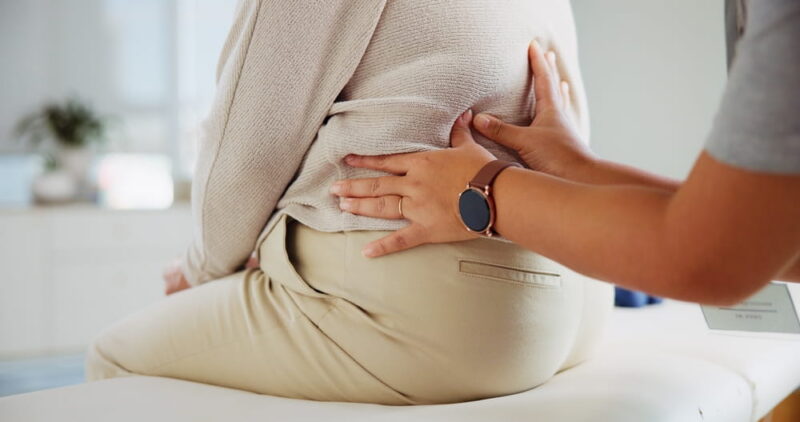
The physical examination gives the physician objective information about how the spine is functioning. The exam may begin with observation of posture, walking pattern, and ease of movement. A person who moves slowly, guards the back, or avoids certain positions may be showing signs of pain or instability.
The physician may assess the range of motion in the neck or lower back. This can include bending forward, leaning backward, rotating, or side-bending. These movements help identify which positions reproduce symptoms and whether mobility is limited by pain, stiffness, or nerve irritation.
A neurological exam is often included when symptoms travel into the arms or legs. This may involve checking reflexes, muscle strength, and sensation. Weakness, numbness, or altered reflexes may suggest nerve involvement. These findings are especially important because they provide measurable signs that can be compared over time.
The exam may also include specific maneuvers that place tension on nerves or stress certain spinal structures. The goal is not to provoke unnecessary pain, but to identify patterns that point toward the source of symptoms.
How Specialists Document Spine Symptoms
Documentation is a major part of workers’ comp spine care. Physicians record where pain is located, how severe it is, what movements worsen it, and whether it affects work duties or daily function. They may also document whether symptoms are improving, worsening, or staying the same.
Clear documentation helps create a timeline. This matters because spine injuries often evolve. A patient may initially report back pain, then later develop leg pain or numbness as swelling or nerve irritation changes. Tracking symptoms over time helps determine whether additional testing is needed.
Functional limitations are also documented. For example, a worker may have difficulty lifting, bending, standing, driving, sitting, climbing stairs, or performing overhead activity. These details help determine safe work restrictions and guide rehabilitation planning.
When Imaging May Be Needed
Not every workplace spine injury requires immediate imaging. Many soft tissue strains improve with conservative care. However, imaging may be considered when symptoms are severe, persistent, progressive, or associated with neurological changes.
X-rays can help evaluate alignment, fractures, or structural changes. MRI scans provide detailed views of discs, nerves, ligaments, and soft tissues. CT scans may be used when bone detail is especially important, such as after significant trauma.
Imaging is interpreted in the context of the history and physical exam. A scan may show degenerative changes that were present before the injury, but the clinical question is whether those findings match the worker’s symptoms and exam results.
Common Spine Diagnoses After Workplace Injuries
Workplace injuries can affect several spinal structures. Some involve muscles and ligaments, while others affect discs, joints, or nerves. A herniated disc may occur when disc material pushes outward and irritates nearby nerves, sometimes causing pain, numbness, tingling, or weakness that travels into an arm or leg.
Other workers develop symptoms related to the narrowing of nerves. Spinal stenosis may be present before an injury but becomes more symptomatic after inflammation, strain, or trauma. In these cases, the evaluation focuses on whether the injury aggravated nerve compression or changed the person’s functional ability.
Other possible diagnoses include sprains, strains, facet joint irritation, fractures, instability, or recurrent symptoms from a prior spine condition. The specific diagnosis affects treatment recommendations and work restrictions.
How Work Restrictions Are Determined
Work restrictions are based on the injury, symptoms, exam findings, and job requirements. A physician may recommend temporary limits on lifting, bending, twisting, reaching, pushing, pulling, or prolonged standing. Restrictions may also address driving, climbing, or repetitive motion depending on the injury.
The goal is to reduce the risk of worsening symptoms while allowing safe activity whenever possible. Complete inactivity is not always beneficial for spine recovery. Many patients do better with appropriate movement, modified duties, and gradual progression.
Restrictions may change as symptoms improve. Follow-up visits allow the physician to reassess strength, pain, mobility, and function. This ongoing documentation helps determine when a worker can safely increase activity or return to full duties.
Treatment Options After the Evaluation
Treatment depends on the diagnosis and severity of symptoms. Many work-related spine injuries begin with conservative care. This may include medication, activity modification, physical therapy, or guided rehabilitation.
Educational resources on physiatry and pain management describe nonsurgical approaches used to reduce pain, improve mobility, and support recovery. These treatments may be especially helpful when symptoms are caused by inflammation, muscle guarding, or nerve irritation.
If symptoms persist despite conservative care, further evaluation may be needed. In some cases, injections or surgical consultation may be considered. Treatment decisions are based on objective findings, symptom progression, imaging, and the worker’s functional needs.
What Patients Can Bring to the Appointment
Arriving prepared can help make a workers’ comp spine evaluation more complete and efficient:
• A clear description of how the injury happened
• A list of current symptoms and when they began
• Prior imaging reports or treatment records, if available
• Information about job duties, lifting requirements, and repetitive tasks
• Notes about what activities worsen or relieve symptoms
These details help the physician understand both the medical injury and the work demands involved.
Why Follow-Up Visits Matter
A single exam provides one snapshot in time. Follow-up visits show how the injury is changing. This is especially important with spine injuries because symptoms may improve, shift, or become more clearly nerve-related over several weeks.
During follow-up, physicians may repeat portions of the physical exam, update restrictions, review therapy progress, and determine whether imaging or additional treatment is appropriate. If symptoms improve steadily, the focus may shift toward strengthening and return-to-work planning. If symptoms worsen or neurological findings appear, the plan may change.
Consistent follow-up also supports accurate documentation. It helps show whether the injury is healing as expected or whether more advanced evaluation is needed.
Clear Documentation Supports Safer Recovery
Workers’ comp spine evaluations help connect the details of a workplace injury with objective medical findings. The process includes more than identifying pain; it examines how the injury happened, how the spine and nerves are functioning, what limitations are present, and what steps may support recovery. For workers in Westwood, Bloomfield, Bridgewater, and East Brunswick, this kind of evaluation can make the path forward feel less uncertain.
Comprehensive Spine Care in New Jersey emphasizes education because workplace spine injuries often involve medical, functional, and occupational concerns at the same time. When patients understand how the evaluation works, they are better prepared to describe symptoms clearly, follow treatment recommendations, and participate in a recovery plan that supports safe movement and long-term spinal health.
Sources
Waddell G, Burton AK (2001). Occupational health guidelines for the management of low back pain at work. Occupational Medicine.
Deyo RA, Weinstein JN (2001). Low back pain. New England Journal of Medicine.
Atlas SJ, Deyo RA (2001). Evaluating and managing acute low back pain in the primary care setting. Journal of General Internal Medicine.