
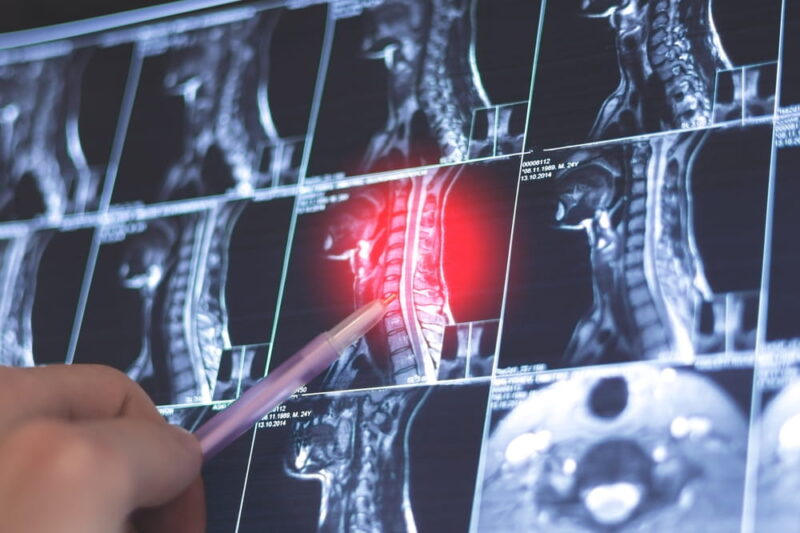
Cervical myelopathy is a condition that develops when the spinal cord becomes compressed in the neck. Unlike nerve compression that affects only one arm or shoulder, spinal cord compression can interfere with balance, coordination, and fine motor control throughout the body. Because symptoms often begin gradually, many people dismiss early warning signs as normal aging or clumsiness. Comprehensive Spine Care in New Jersey emphasizes the importance of recognizing early cervical myelopathy symptoms so individuals can better understand when changes in function may warrant further evaluation.
What Is Cervical Myelopathy?
Cervical myelopathy occurs when degenerative changes in the cervical spine narrow the spinal canal and place pressure on the spinal cord. Common causes include disc degeneration, bone spurs, thickened ligaments, and arthritic changes that gradually reduce space within the canal.
As the spinal cord becomes compressed, signals traveling between the brain and the rest of the body may be disrupted. This can affect motor control, sensation, balance, and reflexes. Because the spinal cord carries information to multiple regions of the body, symptoms are often widespread rather than limited to one isolated area.
Conditions such as cervical spinal stenosis are a frequent underlying contributor to myelopathy, particularly in older adults. Narrowing may progress slowly, allowing symptoms to develop subtly over time.
Subtle Changes in Hand Function
One of the earliest and most commonly overlooked signs of cervical myelopathy involves changes in hand coordination. Individuals may notice difficulty with tasks that require fine motor control, such as buttoning clothing, writing, typing, or handling small objects.
These changes are often painless, which can make them easy to dismiss. Dropping items more frequently or feeling that the hands are clumsy rather than weak is a typical early complaint. Over time, stiffness or altered sensation in the fingers may also develop.
Because these symptoms can mimic arthritis or peripheral nerve conditions, spinal cord involvement may not be immediately suspected. However, progressive hand coordination changes are an important hallmark of early myelopathy.
Balance Issues and Changes in Walking
Another early indicator of cervical myelopathy is subtle difficulty with balance or walking. People may feel unsteady on uneven surfaces, notice a wider stance when walking, or feel less confident navigating stairs. These changes often develop gradually and may not initially cause falls.
Gait changes occur because spinal cord compression affects the signals responsible for coordinating leg movement and balance. Individuals may describe their legs as feeling stiff or heavy rather than painful.
In some cases, balance problems coexist with neck stiffness or arm symptoms, providing additional clues that the cervical spine may be involved rather than the lower back alone.
Neck Stiffness and Arm Symptoms
While cervical myelopathy primarily affects the spinal cord, neck and arm symptoms may also be present. Neck stiffness, reduced range of motion, or aching discomfort can accompany cord compression. Some individuals experience numbness or tingling in the arms or hands.
These symptoms may overlap with conditions such as cervical radiculopathy, which involves nerve root compression rather than spinal cord compression. Unlike radiculopathy, however, myelopathy often affects both sides of the body and involves coordination or balance changes.
Because symptom patterns can overlap, careful evaluation is necessary to determine whether the spinal cord itself is involved.
Changes in Reflexes and Sensation
Altered reflexes are another common finding in cervical myelopathy. Increased reflex responses, muscle tightness, or abnormal reflex patterns may develop as spinal cord compression progresses. These changes are often detected during a neurological exam rather than noticed by the patient.
Sensory changes may include numbness, tingling, or altered sensation in the hands, arms, or legs. Some individuals describe a generalized loss of dexterity or a feeling that their limbs do not respond as smoothly as before.
These neurological changes reflect impaired signal transmission within the spinal cord and tend to progress gradually if compression continues.
Why Early Symptoms Are Often Missed
Early cervical myelopathy symptoms are frequently subtle and painless, making them easy to attribute to aging, stress, or minor orthopedic issues. Because progression is often slow, individuals may adapt to changes without realizing their significance.
In contrast to acute injuries, myelopathy does not usually present with sudden severe pain. This lack of dramatic symptoms can delay recognition until functional changes become more pronounced.
Education plays a key role in helping individuals recognize that coordination, balance, and fine motor changes may signal a neurological issue rather than a simple musculoskeletal problem.
How Cervical Myelopathy Is Evaluated
Evaluation typically includes a detailed neurological exam and imaging studies such as an MRI to assess spinal cord compression. MRI provides detailed views of the spinal canal, discs, ligaments, and spinal cord itself.
In some cases, cervical myelopathy is associated with broader degenerative conditions such as degenerative disc disease, which can contribute to canal narrowing over time. Identifying all contributing factors helps clarify the cause and severity of compression.
Early diagnosis allows for better understanding of symptom patterns and potential progression, even when symptoms are mild.
Why Awareness of Early Signs Matters
Recognizing early cervical myelopathy symptoms is important because spinal cord compression can worsen over time. Subtle functional changes may precede more noticeable difficulty with walking, coordination, or daily activities.
Awareness does not mean assuming the worst, but it does encourage timely evaluation when symptoms involve coordination, balance, or fine motor control. Understanding these early signs helps individuals advocate for appropriate assessment if concerns arise.
Recognizing Cervical Myelopathy Symptoms
Cervical myelopathy often begins with small, easily overlooked changes in coordination, balance, and hand function rather than severe pain. Recognizing these early signs can help individuals better understand when spinal cord involvement may be present. Comprehensive Spine Care in New Jersey focuses on education to help patients recognize spinal symptoms and understand why subtle neurological changes should not be ignored.
Sources
Fehlings, M. G., et al. (2017). Degenerative cervical myelopathy: Diagnosis and management. The Lancet.
Tracy, J. A., & Bartleson, J. D. (2010). Cervical spondylotic myelopathy. Neurologic Clinics.
Nouri, A., et al. (2015). Degenerative cervical myelopathy: Epidemiology and pathophysiology. Spine.