
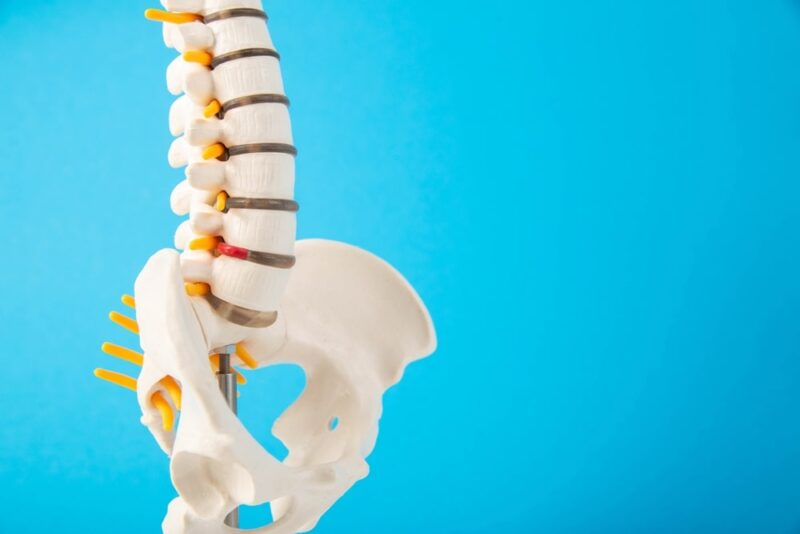
How the Lumbar Facet Joints Function in the Spine
Adults coping with persistent low back discomfort in Westwood, Bloomfield, Bridgewater, and East Brunswick, NJ often search for explanations that extend beyond muscle strain or disc issues. One frequently overlooked source of chronic symptoms is the lumbar facet joints—small but essential structures located along the back of the spine. Each vertebra connects to the one above and below through a pair of facet joints, forming a stabilizing framework that guides bending, twisting, and overall movement.
These joints contain cartilage surfaces that glide smoothly when the spine moves. A thin capsule of connective tissue surrounds each facet joint, providing stability and housing nerve fibers that transmit sensory information. When healthy, these joints control the motion of the lumbar spine and prevent excessive rotation or slippage. As adults age or experience repetitive stress, the supporting cartilage and capsule may gradually wear down, creating friction or inflammation that becomes a source of ongoing pain.
Understanding how these joints operate also helps explain why back pain may flare with certain movements. When bending backward, for example, the lumbar facets compress together, and if irritation or early degeneration is present, this compression may recreate or worsen discomfort.
What Causes Irritation or Degeneration in the Facet Joints?
Facet-related low back pain often develops gradually, beginning with small structural changes that accumulate over time. Degenerative changes—commonly known as osteoarthritis of the spine—can lead to thinning or loss of cartilage within the facet joints. Without the smooth protective surface, bones may rub against each other, causing inflammation and stiffness. These changes often accompany age but can also occur earlier in people with physically demanding occupations or repetitive twisting motions.
Another contributing factor is mild spinal instability. When a vertebra shifts forward relative to the one below it, a condition known as spondylolisthesis, the facet joints often bear additional mechanical stress. Over time, this pressure can enlarge the joints, form bone spurs, or inflame surrounding tissues.
Facet joint enlargement can also play a role in spinal stenosis, a condition where narrowing of the spinal canal compresses nearby nerves. As the facet joints degenerate and thicken, they may encroach upon nerve pathways, creating a combination of joint pain and nerve-related symptoms. Recognizing these interrelationships helps patients understand why facet pain often develops alongside other degenerative spine conditions.
How Facet Joint Pain Presents in Everyday Life
Many adults describe facet-related discomfort as a localized ache in the lower back, often on one side, rather than a sharp, shooting pain that radiates down the leg. Because the joints sit near the surface of the spine, tenderness is typically easy to pinpoint. Symptoms often intensify during extension—leaning backward compresses the irritated surfaces and can recreate the familiar pattern of pain.
Stiffness in the morning or after inactivity is another hallmark of facet irritation. Some individuals notice difficulty straightening up after bending forward or feel an increase in discomfort after standing for long periods. Unlike nerve compression from a herniated disc, facet joint pain rarely produces tingling or numbness in the legs. Instead, symptoms stay concentrated in the lower back, sometimes spreading into the buttocks or hips when inflammation is present.
Daily activities such as lifting groceries, rising from a low chair, or loading a dishwasher may trigger symptoms because these motions require the facets to guide and restrict spinal movement. Recognizing these patterns helps patients and providers identify the likely source of pain.
Why Facet Pain Often Becomes Chronic
The lumbar facets are designed to stabilize the spine, but when they become inflamed or arthritic, surrounding tissues may tighten to limit painful motion. Over time, this protective response can reduce range of motion and perpetuate discomfort. Degeneration also tends to progress slowly, meaning symptoms can fluctuate for years.
Because the facet capsules contain nerve endings, even mild inflammation can produce significant discomfort. Fluid buildup or swelling inside the joint space can intensify pain during specific activities. Bone spurs that develop over time may continue to irritate nearby tissues long after the initial inflammation subsides.
Ongoing mechanical stress also influences chronicity. Everyday movements—walking, bending, twisting, lifting—place varying degrees of load on the lumbar facets. Since completely avoiding these motions is impossible, individuals may experience long-term symptoms without targeted strategies to manage underlying inflammation and stiffness.
Practical Ways to Manage Facet-Related Low Back Pain
Although only a specialist can formally diagnose facet joint pain, many adults find that certain lifestyle adjustments help reduce irritation. A few practical considerations include:
• Modifying posture to minimize excessive lumbar extension
• Applying heat to relax muscles surrounding the joints
• Avoiding repetitive twisting or strenuous lifting during symptom flare-ups
• Practicing gentle stretching routines to maintain mobility
• Strengthening core muscles to support spinal alignment
For individuals exploring nonsurgical pain relief options, treatments such as guided rehabilitation, targeted injections, or other supportive therapies may be recommended through physiatry and pain management. These strategies help reduce inflammation, improve mobility, and address mechanical contributors to facet irritation.
Conclusion
Lumbar facet joints play a crucial role in guiding movement and stabilizing the lower spine, but when they become irritated or arthritic, they can trigger persistent back pain. Understanding the mechanics behind these joints—and how degeneration, inflammation, or spinal alignment changes contribute to discomfort—helps individuals make sense of their symptoms and take informed steps toward relief. By recognizing how facet pain behaves and what daily movements influence it, adults can better prepare for discussions with a spine specialist and explore appropriate treatment options when needed.
Sources
Bogduk, N. (2016). Medical management of chronic low back pain. Pain Clinical Updates.
Kalichman, L., Hunter, D. (2008). Lumbar facet joint osteoarthritis: a review. Seminars in Arthritis and Rheumatism.
Manchikanti, L., Boswell, M. V., Singh, V. et al. (2009). Comprehensive review of epidemiology, diagnosis, and treatment of lumbar facet joint pain. Pain Physician.