
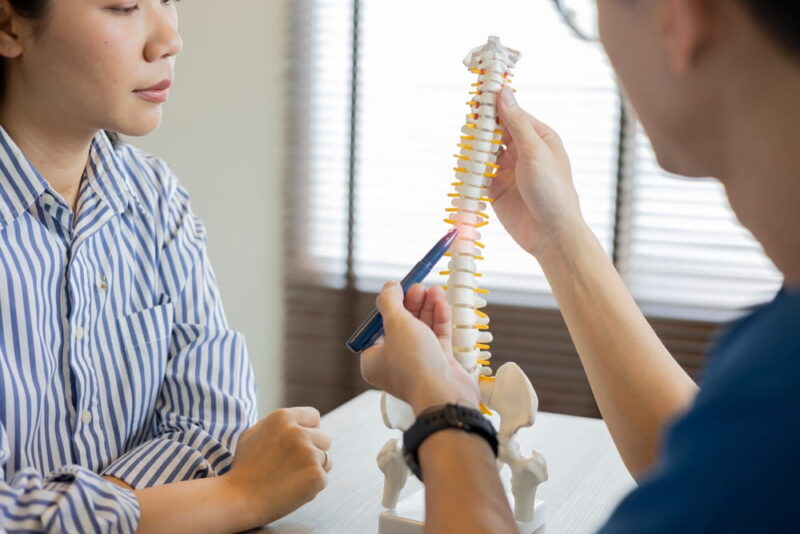
Why Lumbar Instability Affects Daily Movement
Lower back pain that worsens with movement, standing, or lifting can sometimes be traced to a condition known as lumbar instability. At Comprehensive Spine Care in New Jersey, individuals from Westwood, Bloomfield, Bridgewater, and East Brunswick often seek answers when back pain feels unpredictable or the spine seems unable to support normal activity. Lumbar instability occurs when the structures of the lower spine can no longer maintain proper alignment during movement, placing stress on discs, joints, and nerves. Understanding why instability develops and how it is evaluated allows patients to better navigate treatment options. This article explains the common causes of lumbar instability, how it affects spinal function, and the range of solutions used to manage it, informed by the expertise of orthopedic spine surgeons Rafael Levin, MD, MSc; Nomaan Ashraf, MD, MBA; Evan Baird, MD, FAAOS; and Jonathan Lester, MD.
What Lumbar Instability Means
The lumbar spine is designed to balance flexibility with strength. Lumbar instability develops when this balance is disrupted and vertebrae move beyond their normal range. This excessive motion can irritate surrounding nerves, strain muscles, and accelerate disc degeneration. Over time, the spine may struggle to maintain alignment during everyday movements such as bending, twisting, or lifting.
Instability is not always caused by a single event. In many cases, it develops gradually as discs lose height, ligaments stretch, or joints become arthritic. The result may be mechanical back pain that improves with rest but worsens during activity, particularly when the spine is repeatedly loaded.
Common Causes of Lumbar Instability
Degenerative disc changes are one of the most frequent contributors to lumbar instability. As discs wear down, they lose their shock-absorbing ability, allowing abnormal movement between vertebrae. A herniated disc can further compromise stability when disc material protrudes and alters normal spinal mechanics.
Spinal canal narrowing can also coexist with instability. Individuals with spinal stenosis may experience worsening symptoms when movement increases pressure on already crowded nerves. In some cases, prior injuries such as falls or accidents contribute to instability, and educational resources on spine trauma and fractures help explain how structural damage can affect long-term spinal support.
Symptoms Associated With Lumbar Instability
Symptoms of lumbar instability vary but often include persistent lower back pain that worsens with standing or walking and improves when sitting or lying down. Some individuals describe a feeling that the back “gives way” or catches during movement. Muscle spasms are common as the body attempts to compensate for a lack of structural support.
When instability affects nearby nerves, symptoms may extend into the hips, buttocks, or legs. Numbness, tingling, or weakness can occur if nerve roots are irritated. In more advanced cases, instability combined with degenerative changes may limit mobility and endurance, affecting work and daily activities.
How Lumbar Instability Is Evaluated
Evaluation begins with a physical examination focusing on posture, movement patterns, and neurological function. Imaging plays a key role in confirming instability. Flexion-extension X-rays are often used to observe abnormal movement between vertebrae, while MRI scans provide detail on discs, nerves, and soft tissues.
CT scans may be helpful when bone alignment needs closer evaluation, especially after injury. Understanding whether instability is mild or severe helps guide treatment decisions. In some cases, targeted nerve compression may be addressed with procedures such as microdiscectomy if disc fragments are the primary source of symptoms rather than instability itself.
Nonsurgical Solutions for Lumbar Instability
Most individuals with lumbar instability begin with conservative care. Physical therapy is often used to strengthen core and stabilizing muscles that support the spine. Improving muscle control can reduce excessive movement and ease pain.
Pain-relieving strategies may include medication, activity modification, or injections to reduce inflammation. Additional educational information is available through resources related to physiatry and pain management, which outline how nonsurgical approaches are used to manage spine-related discomfort.
For individuals whose symptoms are linked to workplace strain or injury, guidance available through workers’ compensation resources may help explain evaluation and treatment considerations in occupational settings.
Surgical Solutions When Instability Persists
When nonsurgical treatments fail to control symptoms or instability threatens nerve health, surgery may be discussed. Surgical solutions focus on stabilizing the spine and preventing further abnormal movement. One commonly used approach is spinal fusion, which permanently joins vertebrae to restore stability. Techniques such as transforaminal lumbar interbody fusion combine decompression with stabilization to address both nerve compression and mechanical instability.
Other fusion approaches, including anterior lumbar interbody fusion and lateral interbody fusion, illustrate how surgical access points vary depending on anatomy and surgical goals. These methods aim to support alignment while minimizing disruption to surrounding tissues.
In select cases, individuals may ask about motion-preserving procedures. While artificial disc replacement is more commonly used in the cervical spine, educational information on disc replacement helps explain why motion preservation may not always be suitable when lumbar instability is present.
Practical Ways to Support Lumbar Spine Stability
• Maintain strong core and hip muscles through guided exercise
• Use proper lifting mechanics to limit spinal stress
• Avoid prolonged sitting or standing without breaks
• Maintain a healthy weight to reduce spinal load
• Adjust workstations to support neutral posture
Supporting Long-Term Lumbar Spine Health
Lumbar instability can significantly affect comfort, mobility, and quality of life when the lower spine can no longer maintain proper alignment during movement. Understanding the causes of instability, how it is diagnosed, and the range of available solutions empowers individuals to make informed decisions about their care. Comprehensive Spine Care in New Jersey supports patient education for individuals in Westwood, Bloomfield, Bridgewater, and East Brunswick as they learn how to manage lumbar instability and protect long-term spinal health.
Sources
Panjabi MM (1992). The stabilizing system of the spine. Part II. Neutral zone and instability hypothesis. Journal of Spinal Disorders.
Fritz JM, et al. (2005). Clinical examination findings in patients with lumbar instability. Spine.
White AA, Panjabi MM (1990). Clinical biomechanics of the spine. Journal of Biomechanics.