
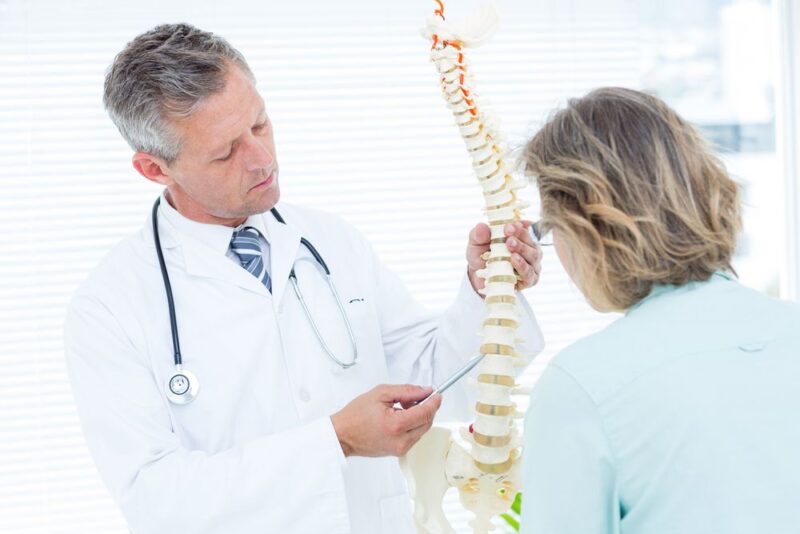
Why Fusion Sometimes Involves More Than One Spinal Level
Patients often expect spine surgery to target a single trouble spot, the one disc or vertebra that shows up circled on an MRI report. That expectation makes sense; it mirrors how most other injuries work. But the spine does not operate as a collection of independent parts. It is a chain, and a problem at one link frequently pulls on the ones next to it.
That interconnected reality is why a surgeon sometimes recommends stabilizing more than one level at once, a decision that can initially sound more dramatic than it needs to. The determining question is never simply how many discs look worn on imaging. It is whether several adjacent segments are genuinely unstable, compressing nerves, or contributing to misalignment together, in ways that treating just one would leave unresolved. Comprehensive Spine Care, with locations across Westwood, Bloomfield, Bridgewater, and East Brunswick, NJ, walks patients through exactly that reasoning, because understanding why certain levels are included, and others are deliberately left alone, turns a complex-sounding surgical plan into something patients can actually follow and feel confident about.
What Multi-Level Spine Fusion Means
The spine is made of individual vertebrae separated by discs and connected by joints, ligaments, and muscles. Each pair of neighboring vertebrae forms a motion segment that allows the spine to bend, rotate, and absorb everyday forces.
Spinal fusion is designed to eliminate problematic movement between selected vertebrae. Bone graft material is placed so that the treated vertebrae can gradually heal together. Screws, rods, cages, or other instrumentation may be used to maintain alignment and stability while fusion develops.
A single-level fusion treats one motion segment. A multi-level fusion extends across two or more segments. The exact number of levels depends on the location and extent of the structural problem. Surgeons generally aim to address the necessary segments while preserving healthy motion elsewhere in the spine whenever possible.
Why Several Segments Can Become Unstable
Spinal instability develops when the structures responsible for controlling movement can no longer maintain normal alignment under everyday loads. Disc degeneration is one potential contributor. As discs lose height and elasticity, more stress may be transferred to the joints and ligaments around them.
These changes do not always remain isolated to one location. Adjacent discs may also deteriorate, arthritis may develop at several joints, or multiple vertebrae may begin moving abnormally. A condition such as spondylolisthesis can further affect alignment when one vertebra shifts relative to another.
Instability may also result from deformity, trauma, previous surgery, or a combination of age-related changes. When several neighboring segments are involved, stabilizing only one of them could leave another significant source of abnormal movement untreated.
Nerve Compression Can Affect Multiple Levels
Fusion is sometimes part of a larger operation intended to relieve pressure on spinal nerves. Degenerative changes can cause narrowing at more than one level, particularly as discs lose height and bone spurs develop.
A patient may have compression affecting different nerve roots, producing pain, numbness, tingling, or weakness in more than one distribution. In the lumbar spine, symptoms may extend into the buttocks or legs. Cervical compression can affect the shoulders, arms, hands, or, when the spinal cord is involved, balance and coordination.
Conditions such as spinal stenosis can involve narrowing around the spinal cord or nerve roots at more than one level. Surgery may involve decompressing the affected nerves and then stabilizing the treated segments when the spine is already unstable or when decompression would remove structures needed for stability. The need for fusion therefore depends on both the source of compression and the mechanical condition of the spine.
Spinal Alignment Can Influence the Decision
Healthy spinal alignment allows body weight and movement forces to be distributed efficiently. When alignment changes substantially, certain areas may carry more stress than others. Over time, this imbalance can contribute to pain, fatigue, degeneration, and difficulty maintaining an upright posture.
In some cases, a multi-level fusion is used not only to stop abnormal movement but also to improve or preserve alignment across a larger section of the spine. The surgeon evaluates how individual segments relate to one another rather than looking at each disc independently.
Standing X-rays can be particularly useful because they show how the spine aligns while supporting the body’s weight. MRI and CT imaging may provide additional information about discs, nerves, joints, and bone anatomy. These studies are considered alongside symptoms and physical examination findings when determining whether a multi-segment problem is present.
Why Abnormal Imaging Alone Does Not Mean Fusion Is Needed
Degenerative findings become increasingly common as people age, and not every abnormality seen on an MRI causes symptoms. Someone may have degeneration at three levels but experience symptoms from only one. Another person may have several segments contributing to instability or nerve compression.
For that reason, surgical planning is not based solely on the number of worn discs visible on a scan. Physicians look for agreement between the patient’s symptoms, neurological examination, movement patterns, and imaging.
This distinction helps avoid treating spinal levels simply because they look different on an image. A multi-level fusion becomes relevant when the broader clinical picture indicates that multiple segments are meaningfully involved.
Different Surgical Approaches Can Be Used
Multi-level fusion does not refer to one specific surgical technique. Surgeons can reach the spine from different directions depending on the location of the condition, the levels involved, and the goals of treatment.
In the lumbar spine, an anterior lumbar interbody fusion approaches the affected disc space from the front of the body. This can allow the damaged disc to be removed and an implant to be positioned between the vertebrae to restore support and promote fusion.
A transforaminal lumbar interbody fusion uses a posterior approach to access the disc space and stabilize the lumbar spine. Other approaches may be selected depending on anatomy and the location of nerve compression or instability.
The number of fused levels and the surgical approach are separate decisions. A surgeon determines both based on what needs to be decompressed, stabilized, or realigned.
Why Conservative Treatment Is Usually Considered First
The presence of degeneration at several levels does not automatically make surgery necessary. When there is no urgent neurological concern or severe instability, treatment often begins with non-surgical strategies.
Physical therapy may improve core strength, flexibility, posture, and movement mechanics. Medication or targeted pain-management techniques may help control symptoms while a patient remains active. Educational information about physiatry and pain management provides additional context on non-surgical approaches that may be considered for spine-related pain.
How a person responds to appropriate conservative treatment provides useful information. If symptoms improve enough to restore function, surgery may not be necessary. When significant symptoms continue despite treatment, or when neurological deficits or instability progress, fusion may become a more appropriate discussion.
Factors Considered Before Multi-Level Fusion
Because multi-level fusion affects a larger portion of the spine than a single-level procedure, surgical planning is individualized. Important considerations may include:
- Which spinal levels clearly correspond with the patient’s symptoms
- Whether abnormal movement or instability is present
- The extent of nerve or spinal cord compression
- Overall spinal alignment and deformity
- Bone quality and general health
- Previous spine procedures
- Whether appropriate non-surgical treatment has been unsuccessful
Looking at these factors together helps determine whether fusion is appropriate and, if so, how many levels actually need stabilization.
How Multi-Level Fusion Affects Spinal Motion
One of the most common questions about multi-level fusion concerns flexibility. Because fused vertebrae no longer move independently, motion is reduced across the treated segments. The practical effect depends on where the fusion is performed and how many levels are included.
The spine contains many motion segments, so movement can still occur above and below a fusion. However, longer fusions generally affect overall mobility more than shorter ones. This tradeoff is considered carefully when surgery is planned.
The goal is not to make the spine rigid. It is to stabilize segments where movement has become harmful while preserving useful motion in healthy areas whenever possible. This is another reason surgeons generally avoid including levels that do not need treatment.
Recovery Is a Gradual Process
Multi-level fusion creates immediate structural support through instrumentation, but biological fusion takes time. New bone must gradually develop between the treated vertebrae before a mature fusion is established.
Early recovery usually emphasizes protecting the surgical area while gradually restoring safe movement. Walking is commonly incorporated as activity increases, and rehabilitation may later focus on strength, posture, flexibility, and body mechanics. Specific restrictions vary according to the procedure and the patient’s healing progress.
Follow-up imaging can help physicians assess alignment, instrumentation, and fusion development. Returning to work, exercise, lifting, and other demanding activities is generally individualized rather than determined by a single timeline.
Seeing Multi-Level Fusion as a Structural Decision
The logic behind multi-level fusion comes down to matching the surgical plan to what is actually happening mechanically, not to how many segments appear abnormal on a scan. Degeneration is common with age, and plenty of people carry multi-level changes without ever developing symptoms that warrant surgery. The segments that get fused are the ones where instability, nerve compression, or alignment problems are demonstrably present and connected to what the patient is experiencing.
That distinction also explains why surgeons work to preserve healthy motion wherever they can. A longer fusion is not automatically a better one; it is simply the necessary response when the mechanical problem itself spans multiple levels. For patients in Westwood, Bloomfield, Bridgewater, and East Brunswick, NJ, Comprehensive Spine Care approaches these decisions by evaluating the spine as a connected structure rather than a series of isolated segments, aiming to stabilize exactly what needs stabilizing and nothing more, so that the eventual recovery reflects a plan built around the individual spine rather than a generic template.
Sources
Resnick DK, et al. (2005). Guidelines for the performance of fusion procedures for degenerative disease of the lumbar spine. Journal of Neurosurgery: Spine.
Matz PG, et al. (2009). Guidelines for the surgical management of cervical degenerative disease. Journal of Neurosurgery: Spine.
Fritzell P, Hägg O, Wessberg P, Nordwall A (2001). Lumbar fusion versus nonsurgical treatment for chronic low back pain. Spine.