
A Non-Surgical Path for Spine Recovery
Spine pain does not always mean surgery is the next step. In many cases, recovery begins with understanding what is causing the pain, how movement is affected, and which treatments can reduce inflammation while restoring function. For individuals in Westwood, Bloomfield, Bridgewater, and East Brunswick, physiatry can play an important role in this process by focusing on non-surgical spine care, rehabilitation, and pain management.
At Comprehensive Spine Care in New Jersey, patients often learn about physiatry when they are dealing with back pain, neck pain, nerve irritation, or limited mobility, but are not ready for surgery or may not need it. Physiatrists specialize in physical medicine and rehabilitation, which means they look at how the spine, nerves, muscles, joints, and movement patterns work together. With guidance from spine specialists, patients can better understand how non-surgical treatment may support healing and help them stay active.
What Physiatry Means in Spine Care
Physiatry is a medical specialty focused on restoring function and improving quality of life for people with pain, injury, or physical limitations. In spine care, physiatrists evaluate how pain affects movement, strength, posture, work, sleep, and daily activity. Their approach is often broader than simply identifying where pain is located.
Educational information about physiatry and pain management explains how non-surgical care may include diagnostic evaluation, medication management, injections, rehabilitation planning, and guidance on activity modification. The goal is to reduce symptoms while helping the body move more efficiently.
A physiatrist may coordinate care with physical therapists, spine surgeons, imaging specialists, and other medical professionals. This team-based approach is especially useful when symptoms are complex or when several spinal structures may be contributing to discomfort.
Why Non-Surgical Care Often Comes First
Many spine conditions improve without surgery. Inflammation may calm down, irritated nerves may become less sensitive, and muscles may regain strength with the right treatment plan. Physiatry helps guide this process by identifying which non-surgical tools are most appropriate for the condition.
For example, a patient with a herniated disc may experience leg or arm pain when disc material irritates a nerve root. Depending on the severity of symptoms, treatment may begin with physical therapy, anti-inflammatory strategies, activity changes, or targeted injections. Surgery may only be considered if symptoms persist, worsen, or involve significant neurological deficits.
Non-surgical care is not a passive approach. It often requires active participation, including guided exercise, posture changes, movement retraining, and consistent follow-up. The purpose is to create conditions that support recovery while monitoring whether symptoms are improving as expected.
How Physiatrists Identify the Source of Pain
Spine pain can come from many structures, including discs, joints, nerves, muscles, ligaments, or alignment changes. A physiatrist begins by listening carefully to the symptom pattern. Pain that travels into the leg may suggest nerve irritation in the lower back, while pain that spreads into the arm may point toward the cervical spine.
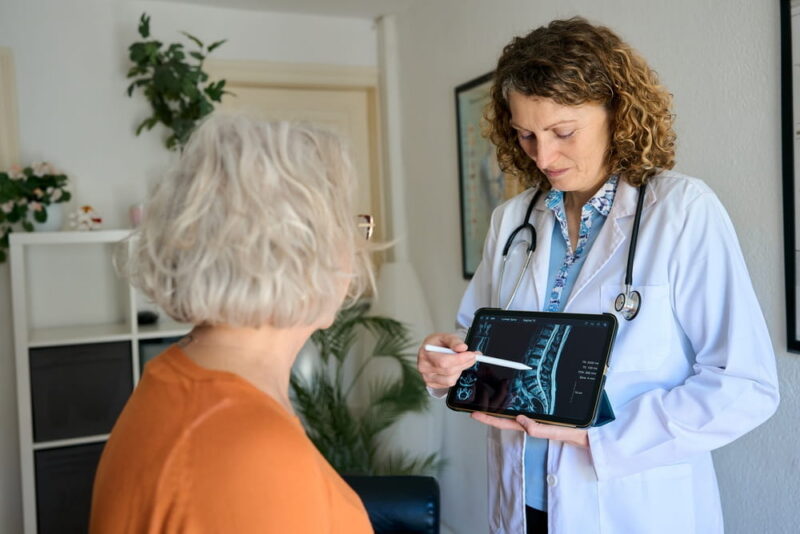
The physical exam may include testing strength, reflexes, sensation, flexibility, posture, and walking mechanics. These findings help determine whether symptoms are mainly mechanical, nerve-related, inflammatory, or muscular. Imaging, such as X-rays or MRI scans, may be reviewed when needed, but the results are interpreted alongside the patient’s symptoms and examination.
This matters because imaging may show age-related changes that are not necessarily the cause of pain. A physiatrist helps connect the imaging findings to the person’s actual function and symptoms, which can reduce unnecessary treatment and focus care more precisely.
Conditions Physiatry May Help Manage
Physiatry may be part of care for many spine-related conditions. Patients with spinal stenosis may benefit from non-surgical strategies designed to reduce nerve irritation, improve walking tolerance, and strengthen supporting muscles. Stenosis often develops gradually, so treatment may focus on managing symptoms and preserving function.
Patients with spondylolisthesis may also work with a physiatrist when spinal alignment or mild instability contributes to back or leg symptoms. While therapy cannot change the structural position of a vertebra, strengthening and movement modification may help reduce stress on affected segments.
Physiatry may also support recovery after injuries, flare-ups, or chronic pain episodes. It can be especially helpful when symptoms are not severe enough for surgery but still interfere with normal life.
The Role of Physical Therapy and Rehabilitation
Physical therapy is often a central part of physiatry-based spine care. A rehabilitation plan may focus on improving flexibility, strengthening the core and hips, restoring mobility, and teaching safer movement patterns. The exact program depends on the diagnosis and the patient’s current level of function.
For some patients, therapy begins gently with stretching, walking, and basic stabilization exercises. Others may progress toward strength training, balance work, and return-to-activity planning. The goal is not simply to exercise more, but to move in a way that reduces strain on the spine.
Rehabilitation also helps patients understand which activities aggravate symptoms and which movements are safe. This can be reassuring for people who have become fearful of movement after repeated pain flare-ups.
Injections and Targeted Pain Relief
When pain limits participation in therapy or daily movement, targeted injections may be considered. These treatments are not meant to replace rehabilitation, but they may reduce inflammation enough to help patients move more comfortably.
Depending on the source of pain, injections may target irritated nerve roots, inflamed joints, or other pain-generating structures. The goal is to calm symptoms while continuing to address strength, flexibility, and function.
A physiatrist may also use injections diagnostically. If pain improves after a targeted injection, that response can help confirm which structure is contributing to symptoms. This information may guide the next steps in care.
When Surgery Becomes Part of the Conversation
Physiatry focuses on non-surgical care, but it also helps identify when surgery should be considered. If a patient develops progressive weakness, severe nerve compression, loss of function, or symptoms that do not improve despite appropriate conservative care, a surgical evaluation may be recommended.
For example, patients with persistent nerve compression may eventually learn about procedures such as microdiscectomy, which is designed to remove disc material pressing on a nerve. Not every patient with a disc problem needs surgery, but knowing when symptoms are not improving appropriately is part of good spine care.
In this way, physiatry can help patients avoid unnecessary surgery while still recognizing when surgical care may offer the most appropriate path forward.
Practical Ways Physiatry Supports Recovery
A physiatry plan is usually individualized, but several themes are common in non-surgical spine recovery:
• Identifying the true source of pain through careful examination
• Reducing inflammation and nerve irritation when possible
• Improving strength, posture, flexibility, and movement control
• Supporting safe return to work, exercise, and daily activities
• Monitoring progress so treatment can be adjusted when needed
These steps help patients move from short-term symptom relief toward longer-term spine health.
Why Follow-Up Matters in Non-Surgical Spine Care
Spine recovery is rarely a straight line. Symptoms may improve, plateau, or flare depending on activity, inflammation, stress, sleep, and conditioning. Follow-up visits help determine whether treatment is working and whether adjustments are needed.
A physiatrist may change therapy recommendations, modify medications, consider injections, or request additional imaging if symptoms are not responding as expected. This ongoing process helps keep care aligned with the patient’s goals and physical progress.
Follow-up is also useful because it gives patients a chance to ask questions about movement, work restrictions, exercise, and prevention. Education is often one of the most important parts of long-term recovery.
Moving Forward Without Rushing to Surgery
Physiatry gives many patients a structured way to recover from spine pain without immediately turning to surgery. By combining diagnosis, rehabilitation, pain management, and functional planning, this specialty helps address both symptoms and the way pain affects daily life. For some people, psychiatry becomes the main path to improvement; for others, it helps clarify whether more advanced care is needed.
For individuals in Westwood, Bloomfield, Bridgewater, and East Brunswick, learning about non-surgical spine care can make treatment decisions feel less overwhelming. Comprehensive Spine Care in New Jersey supports patient education because understanding the role of physiatry helps patients participate more confidently in recovery, ask better questions, and build habits that protect spinal function over time.
Sources
Chou R, et al. (2017). Nonpharmacologic therapies for low back pain. Annals of Internal Medicine.
Foster NE, et al. (2018). Prevention and treatment of low back pain. The Lancet.
Deyo RA, Weinstein JN (2001). Low back pain. New England Journal of Medicine.