
Introduction
Cervical spine instability can significantly impact daily comfort, movement, and confidence, especially when symptoms appear gradually or begin to interfere with work, driving, or routine activities. At Comprehensive Spine Care in Westwood, Bloomfield, Bridgewater, and East Brunswick, NJ patients often seek clarity on why their neck feels unstable or why pain radiates into the shoulders or arms. Understanding what cervical instability means, how it develops, and how specialists diagnose it allows individuals to make informed decisions about their health. In this article, readers will learn the causes, symptoms, diagnostic process, and treatment approaches related to cervical instability, informed by the expertise of orthopedic spine surgeons Rafael Levin, MD, MSC; Nomaan Ashraf, MD, MBA; Evan Baird, MD, FAAOS; and Jonathan Lester, MD.
What Cervical Spine Instability Means
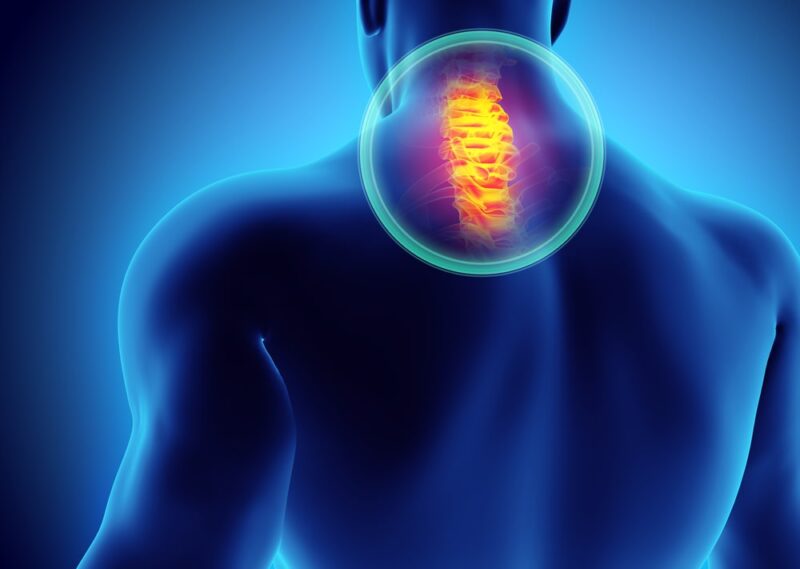
Cervical instability occurs when the vertebrae in the neck move beyond their normal range, often because supporting structures—such as discs, ligaments, or joints—have weakened or been damaged. The cervical spine is responsible for supporting the head and protecting the spinal cord, and even small changes in stability can lead to significant discomfort or neurological symptoms. Excessive movement between vertebrae may irritate nearby nerves or soft tissues, producing pain, stiffness, or restricted motion.
Instability may develop slowly over time or follow an injury. Age-related disc wear, ligament laxity, and degenerative joint changes all contribute to the condition. In some cases, instability arises from spinal alignment issues or previously untreated trauma.
Common Causes and Related Conditions
Cervical instability often results from several contributing factors working together. Degenerative disc changes, for example, cause discs to lose height and elasticity over time. As discs thin, the spine’s natural support system weakens, increasing the likelihood of abnormal vertebral motion. More detail on disc changes can be explored by reviewing how a herniated disc develops and affects spinal movement.
Trauma, such as whiplash from a vehicle accident or a fall, can stretch or tear ligaments that stabilize the cervical spine. Fractures may also change the spine’s structural integrity. Other conditions, including spondylolisthesis, involve one vertebra shifting out of place, which may contribute to instability over time.
In some cases, narrowing of the spinal canal from spinal stenosis can coexist with instability, further complicating symptoms. Patients recovering from workplace-related injuries may also experience instability due to repetitive strain or sudden trauma, and additional educational resources are available for individuals navigating work-related spine injuries.
Symptoms That Suggest Cervical Spine Instability
Symptoms vary widely from person to person, but neck pain is one of the most common signs. Some individuals describe a grinding or clicking sensation when turning the head, while others notice stiffness or a feeling of segmental “slipping.” Radiating pain into the shoulders, arms, or upper back may occur when a nerve root becomes irritated.
Neurological symptoms—such as numbness, tingling, or weakness—require further evaluation. When instability affects the spinal cord, individuals may experience balance difficulties, reduced coordination, or challenges with fine motor tasks. These symptoms warrant prompt assessment to determine whether spinal cord involvement is present.
How Cervical Instability Is Diagnosed
Diagnosis begins with a detailed physical examination, during which a physician assesses posture, range of motion, reflexes, and neurological function. Imaging plays a crucial role in confirming instability. Flexion-extension X-rays may reveal abnormal vertebral movement, while MRI scans allow physicians to evaluate disc health, soft tissue structures, and nerve pathways.
CT imaging may be used when clearer views of bone alignment are needed, especially after trauma. These tests help determine whether instability is mild, moderate, or severe and guide decisions about treatment. When disc-related compression contributes to symptoms, individuals may explore how procedures like microdiscectomy relieve pressure on irritated nerves.
Conservative Treatment Approaches
Most treatment plans begin with nonsurgical care focused on reducing pain and improving stability. Physical therapy can strengthen deep neck muscles, improve posture, and increase flexibility. Activity modification may help reduce strain on affected structures.
Pain management strategies may include medication or injections to reduce inflammation. More information on these options can be found by reviewing educational content related to physiatry and pain management. Short-term use of a cervical collar may help stabilize the neck temporarily, though long-term use is typically avoided to prevent muscle weakening.
When Surgery May Be Considered
Surgery may be discussed if conservative treatments are unsuccessful or if instability threatens spinal cord safety. One common surgical approach is anterior cervical discectomy and fusion. This procedure removes a diseased disc and stabilizes the spine by fusing vertebrae together. Readers can learn more by exploring the principles of anterior cervical discectomy and fusion.
In select cases, artificial disc replacement may help preserve natural motion. More information on this technology is available through educational resources on disc replacement. Other stabilization techniques, such as lateral interbody fusion, may be appropriate depending on individual anatomy and the source of instability.
Scoliosis-related misalignment may also contribute to instability, and additional insight can be found by reviewing the mechanics of scoliosis.
Practical Tips for Supporting Cervical Spine Health
Daily habits can play an important role in managing symptoms and supporting overall neck health. While these strategies cannot reverse structural changes, they can help minimize discomfort:
• Maintain good posture during computer and phone use
• Incorporate gentle stretching into daily routines
• Strengthen core and upper-back muscles to support spinal alignment
• Avoid sudden, high-impact neck movements
• Use ergonomic workstations to minimize strain
These habits complement medical treatment and may help reduce symptom flare-ups.
Conclusion
Cervical spine instability can influence mobility, comfort, and confidence in everyday activities, but understanding its causes and treatments empowers individuals to make informed decisions about their spinal health. Learning how instability develops, how it is diagnosed, and what treatment options exist allows patients to take an active role in their care. Comprehensive Spine Care in Westwood, NJ, supports patient education as an important step toward maintaining lifelong cervical spine health.
Sources
Boden SD, McCowin PR, Davis DO (1990). Abnormal motion of the cervical spine. Spine.
Kauppila LI (1997). Cervical spine degeneration. Journal of Bone & Joint Surgery.
White AA, Panjabi MM (1990). Clinical biomechanics of the spine. Journal of Clinical Biomechanics.