
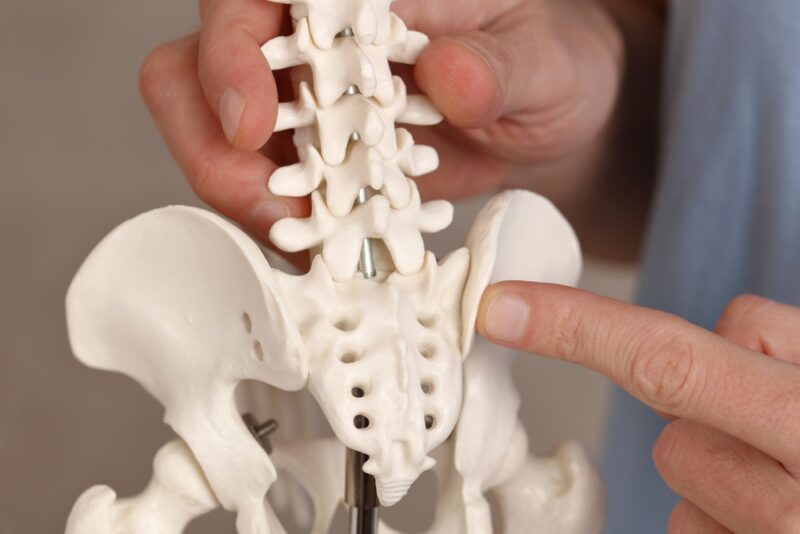
When people think about spinal health, the focus often falls on the neck or lower back, but the sacral spine plays an equally vital role in supporting your body. Located at the base of the spine, the sacrum is a triangular-shaped bone that connects the spine to the pelvis, acting as a foundation for stability, movement, and balance. Beyond providing structural support, the sacral spine also protects important nerves that influence your legs, hips, and pelvic organs. Understanding the sacrum’s functions and the conditions that can affect it is essential for maintaining overall spinal health and preventing long-term discomfort.
In This Blog:
- Anatomy of the Sacral Spine
- Functions of the Sacral Spine
- Common Conditions Affecting the Sacral Spine
- Symptoms of Sacral Spine Issues
- Diagnosis and Medical Evaluation
- Treatment and Management Options
- Preventing Sacral Spine Problems
Anatomy of the Sacral Spine
The sacral spine, or sacrum, is a triangular bone located at the base of your spine, just below the lumbar (lower back) region. Unlike the vertebrae higher up in the spine, which are separate and flexible, the sacrum is made up of five vertebrae (S1–S5) that naturally fuse together as you grow into adulthood. This fusion creates a strong, solid structure that serves as the backbone’s foundation.
The sacrum connects to the pelvis at the sacroiliac joints, forming a critical link between your spine and your hips. Just below the sacrum lies the coccyx, or tailbone, which adds additional stability when sitting. Because of its unique shape and placement, the sacrum acts like a keystone in an arch in that it distributes weight evenly and keeps your spine aligned.
Functions of the Sacral Spine
The sacral spine does much more than simply sit at the bottom of your back. It plays several key roles in helping your body move and function every day:
- Supports body weight: The sacrum bears much of the body’s weight, transferring it from the spine into the pelvis and legs.
- Provides stability: By anchoring the spine to the pelvis, the sacrum helps you maintain balance and posture whether you’re walking, standing, or sitting.
- Protects nerves: Inside the sacrum are openings (called foramina) where sacral nerves pass through. These nerves play a major role in controlling sensation and movement in the hips, legs, bladder, and bowel.
- Enables movement: While the sacrum itself doesn’t move much, its connection to the sacroiliac joints allows for small movements that absorb shock and provide flexibility during walking, running, or bending.
Without a healthy sacral spine, everyday activities, like standing up from a chair, lifting objects, or even maintaining good posture, can become difficult and painful.
Common Conditions Affecting the Sacral Spine
Like other parts of the spine, the sacrum can develop problems that lead to discomfort or mobility issues. Some of the most common conditions include:
- Sacroiliac (SI) joint dysfunction: The SI joints connect the sacrum to the pelvis. If these joints become inflamed or misaligned, it can cause pain in the lower back, hips, or buttocks.
- Sacral fractures: Often the result of trauma, falls, or osteoporosis, fractures in the sacrum can be painful and may limit mobility.
- Degenerative changes: Conditions like arthritis or disc degeneration near the S1 vertebra can cause stiffness and pain over time.
- Nerve compression: If sacral nerves are irritated or compressed, it can lead to sciatica or other nerve-related symptoms that radiate into the legs.
These conditions may range from mild to severe, but even minor issues can disrupt daily life if left untreated.
Symptoms of Sacral Spine Issues
Problems in the sacral spine often present with noticeable symptoms that can interfere with comfort and activity. Common signs include:
- Localized pain in the lower back, hips, buttocks, or tailbone area.
- Radiating pain that travels down one or both legs, similar to sciatica.
- Difficulty with movement, such as sitting, standing, or walking for long periods.
- Numbness, tingling, or weakness in the hips or legs caused by nerve involvement.
- Pelvic discomfort or pain that worsens with certain movements, such as climbing stairs or bending.
Because these symptoms can overlap with other spinal or hip problems, getting a professional evaluation is important for identifying the true source of discomfort.
Diagnosis and Medical Evaluation
When you experience persistent lower back, pelvic, or leg pain, a healthcare professional will perform a thorough evaluation to determine if the sacral spine is the source of the problem. Diagnosis may include:
- Medical history and physical exam: Your provider will ask about your symptoms, daily activities, and past injuries. They’ll also perform hands-on tests to check mobility, strength, and areas of tenderness.
- Imaging studies:
- X-rays can reveal fractures, arthritis, or structural changes in the sacrum.
- CT scans provide detailed images of bone injuries.
- MRI scans can detect nerve compression, soft tissue problems, or inflammation around the sacrum and sacroiliac joints.
- Diagnostic injections: Sometimes, a doctor may use a numbing injection in the sacroiliac joint. If the pain improves, it confirms that the joint is the source of the problem.
Accurate diagnosis is key to tailoring the right treatment and avoiding unnecessary procedures.
Treatment and Management Options
The good news is that many sacral spine issues can be managed effectively with conservative treatments. Options may include:
Non-surgical approaches:
- Physical therapy to strengthen core and pelvic muscles, improve flexibility, and restore stability.
- Chiropractic adjustments to improve alignment and reduce joint stress.
- Medications such as anti-inflammatories or muscle relaxants to relieve pain.
Lifestyle modifications:
- Practicing good posture and ergonomics at work.
- Using proper lifting techniques to avoid strain.
- Incorporating regular low-impact exercise like walking, swimming, or yoga.
Interventional treatments:
For more severe cases, doctors may recommend sacroiliac joint injections, nerve blocks, or radiofrequency ablation to reduce pain.
Surgical options:
Surgery is typically reserved for rare, severe cases, such as complex fractures or instability, that don’t respond to other treatments.
With the right care plan, most people find significant relief and can return to normal activities without major limitations.
Preventing Sacral Spine Problems
Taking proactive steps can go a long way in protecting the sacral spine and avoiding pain or injury. Some effective strategies include:
- Strengthen your core and pelvic muscles: A strong core provides stability and reduces stress on the sacrum. Exercises like planks, bridges, and gentle Pilates movements can help.
- Practice proper lifting techniques: Bend your knees, keep your back straight, and use your legs, not your lower back, to lift heavy objects.
- Maintain good posture: Sitting or standing with proper alignment reduces unnecessary strain on the sacrum and surrounding joints.
- Stay active with low-impact exercise: Activities like swimming, cycling, or yoga keep your spine flexible and your muscles engaged without putting too much pressure on the sacrum.
- Manage weight: Carrying excess body weight adds stress to the sacral region, so maintaining a healthy weight can help prevent problems.
By making these habits part of your daily routine, you can support the long-term health of your sacral spine.
Conclusion
The sacral spine may not get as much attention as the neck or lower back, but it plays a central role in stability, mobility, and nerve function. From supporting body weight to connecting the spine with the pelvis, the sacrum is a key part of your spinal foundation. When pain or discomfort arises, it’s important to recognize the signs and seek professional care to prevent long-term issues. By understanding how the sacral spine works, and by practicing healthy habits to protect it, you can reduce your risk of injury, improve your posture, and keep your spine strong for years to come.
Struggling with lower back or pelvic pain? Contact Comprehensive Spine Care in NY & NJ today to get expert relief and restore your mobility.